
Okay, hear me out—wallets are personal. They live in your browser, they sign your transactions, and they guard your keys. Wow. At first I treated extensions like low-stakes apps. Big mistake. Something felt off about trusting a single click for everything: approvals, token swaps, contract calls. Seriously? Yes. My instinct said treat browser wallets like front-door locks, not just app conveniences.
I’ve been testing DeFi browser extensions for years, poking at UX and threat models. Initially I thought all extensions were roughly the same. But then I noticed patterns — UX choices that make users sloppy, approval flows that train poor habits, and permission requests that feel benign until they aren’t. Actually, wait—let me rephrase that: some designs make it easy to sign without thinking, and that’s the real problem. On one hand convenience improves adoption; on the other hand it increases risk, especially when interacting with novel contracts. Hmm… this is where a thoughtful extension matters.
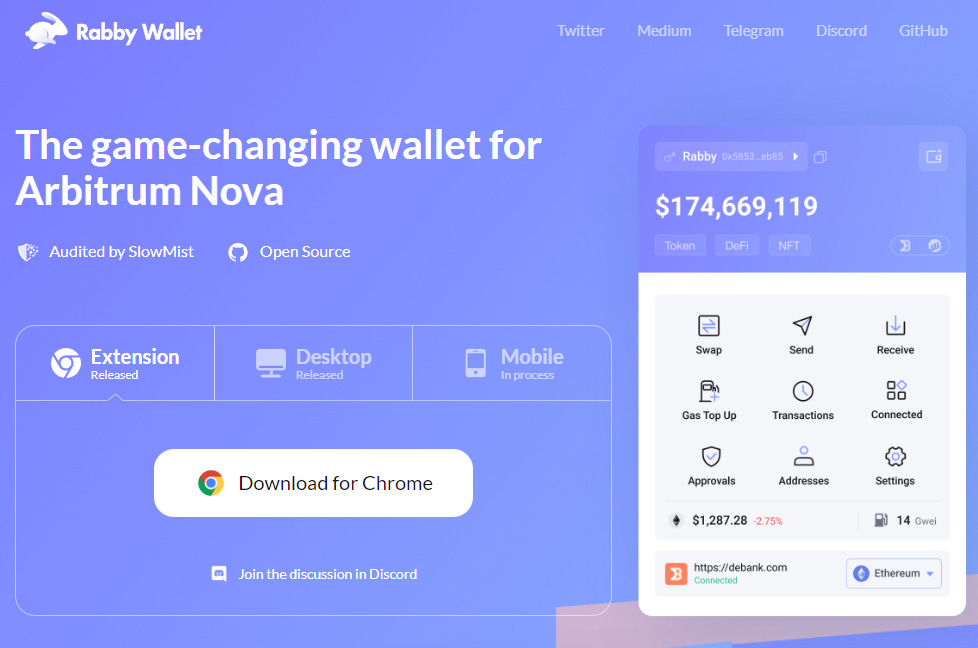
What Rabby Wallet Brings to the Table
The short version: it pushes you to be deliberate. Rabby Wallet is a browser-extension wallet built for DeFi users who care about security without sacrificing UX. I’m biased, but the team clearly thought through common attack surfaces, phishing vectors, and how people actually use wallets. There’s a neat balance between helpful tooling and firm guardrails.
For folks who want to try it, I recommend checking out rabby wallet—their install and onboarding are straightforward, and they document the security model. It’s worth a look if you care about safer interactions. Really—it’s a useful first step.
Rabby’s standout features are practical. It separates approvals more cleanly than many alternatives. It gives clearer metadata about which contract you’re interacting with and summarizes permissions in human-friendly language. Those sound like small things. But when you’re approving 10 transactions a week, those small things matter a lot.
Here’s the thing. Not every wallet can give you both convenience and context. Rabby tries to nudge users to safer behavior without being annoying. That nudge is the difference between clicking “Approve” reflexively and pausing to read what a dApp is actually asking for.
Practical Threat Models — and How to Think About Them
Short note: phishing is still king. Wow. Malicious dApps, clipboard hijacks, fake extension UIs, and deceptive token approvals all play into the same game. If you ignore the prompts and click through, you lose funds fast.
Here’s a useful mental model. Think in layers:
- Endpoint security: your browser and device health.
- Extension integrity: was the wallet downloaded from an official source?
- Interaction safety: does the wallet clearly show what a transaction does?
- Approval granularity: are you granting blanket permissions or fine-grained ones?
On one hand, you want features like gas control and multi-chain support. On the other, you need strict signals when a contract tries to drain tokens. Rabby is helpful here because it emphasizes approval limits and shows contract provenance more clearly than many peers. Though actually, it’s not perfect — there are edge cases where manual diligence is still required.
How I Use Rabby Day-to-Day
I’m not a casual user; I hop among chains, test contracts, and manage multiple accounts. My workflow is simple and repeatable:
- Lock the wallet when not in use. Small habit, big impact.
- Create separate accounts for trading vs. long-term holdings.
- Use the approval history to audit what you granted — weekly checks.
- Prefer explicit, one-time approvals over infinite allowances.
One time, I almost signed an infinite approval for a sketchy token. My instinct flagged it—something about the gas estimate and the contract name. I paused, looked it up, and avoided a loss. That pause was the product of better UX plus habit. Those moments add up.
Also, if you use hardware wallets, Rabby integrates cleanly. That layered approach — extension UI plus hardware confirmation — reduces risk. It’s not invincible. Nothing is. But it raises the bar for attackers.
Common Missteps and Quick Fixes
People do dumb things. No shame. But learn from them.
Misstep one: blanket approvals. Fix: use one-time approvals or manually revoke them later. It takes two minutes. Seriously, do it.
Misstep two: mixing funds for experiments and holdings. Fix: compartmentalize accounts. Keep a hot account for small experiments and a cold account for savings. Your tax return won’t care. But your balance will.
Misstep three: ignoring domain and contract metadata. Fix: read the details. If something looks odd, pause. Contact the dApp team. If they don’t respond quickly, don’t proceed. That kind of quiet skepticism saves money.
FAQ — Quick answers for busy DeFi users
Is Rabby Wallet better than other popular browser wallets?
“Better” depends on priorities. If you prioritize clearer approval flows, transaction context, and integrations with hardware wallets, Rabby is compelling. If you want the largest ecosystem of connected dApps, other wallets may be more ubiquitous. On balance I prefer Rabby for safety-first daily use.
Can Rabby protect me from phishing?
Partially. It reduces risk by surfacing contract details and approval scopes, but device hygiene and cautious linking behavior are still necessary. Use URL verification, check signatures, and avoid unknown dApps. You’re still the last line of defense.
How do I recover if I lost access to my account?
Recovery depends on your seed phrase. Store that phrase offline, in multiple secure locations. Rabby, like most non-custodial wallets, relies on your seed for recovery. No seed, no recovery. I know that sounds ominous, and it is.
